
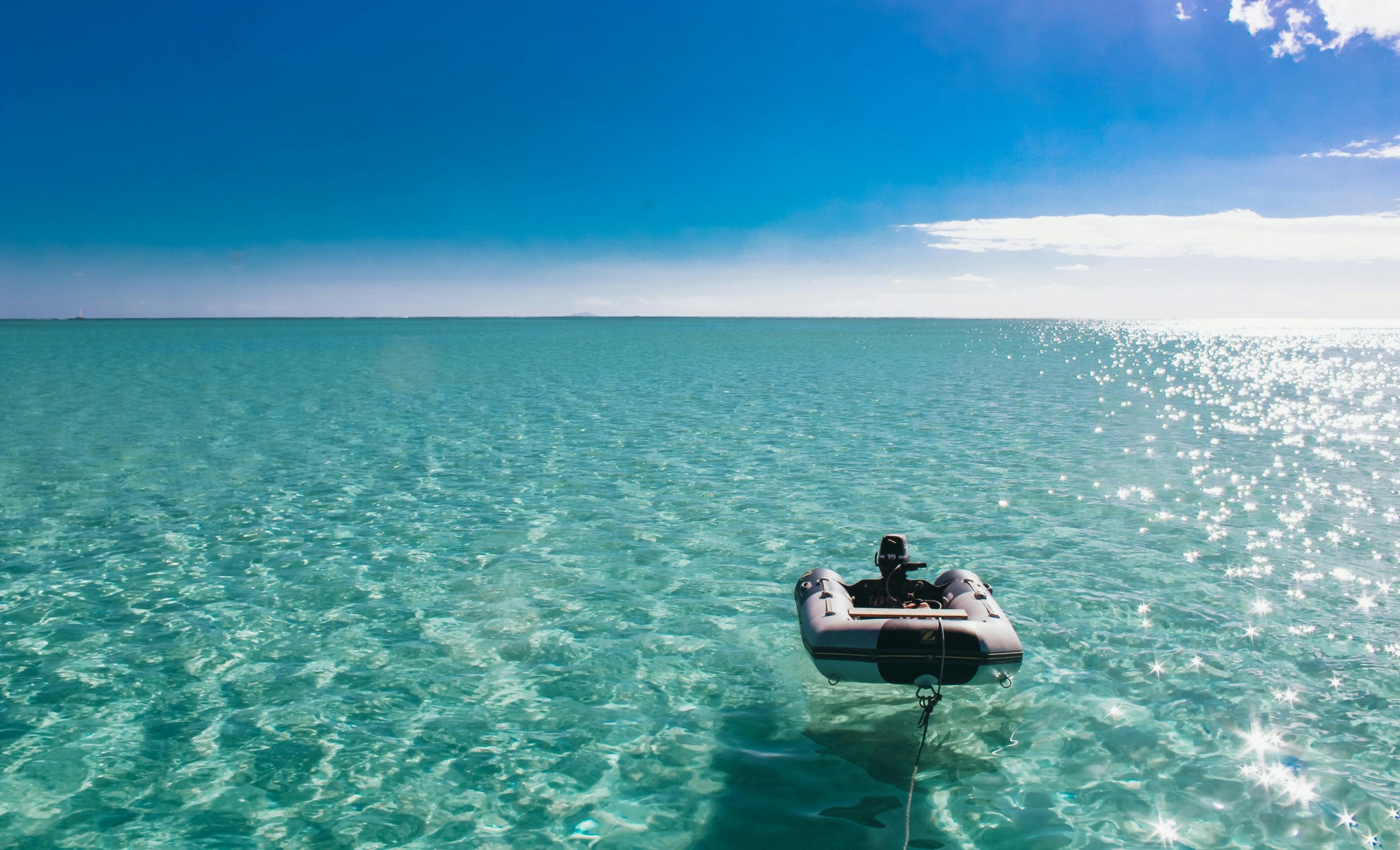
Choosing the right dinghy is essential for making life on the water easier and more enjoyable. Also known as tenders, dinghies are used to transport people between a main boat and the shore, a beach, or another vessel when anchored.
Often considered secondary equipment, dinghies are in fact far more important than they might seem at first glance. A well-chosen dinghy can quickly become a real asset on board, making daily life easier, more comfortable, and simply more enjoyable on the water.
In this article, we take a closer look at the different types of dinghies available, the main players on the market, and the key points to keep in mind when choosing yours. If you’re wondering which RIB dinghy is right for you, you’re in the right place.
1) The different types of dinghies
Inflatable-floor dinghies: Light, compact, and easy to handle, inflatable dinghies with inflatable floors are among the most practical options available. They are particularly appreciated for their simplicity: easy to inflate, easy to transport, and easy to store.
These models are usually built with multiple independent air chambers, improving both safety and reliability. Their main advantage lies in drop-stitch technology, which allows the floor to become perfectly flat and very rigid once inflated, significantly improving comfort on board.
Solid-floor dinghies: A step up in terms of stability and comfort, inflatable dinghies with a solid floor feature a rigid deck, often made of aluminum. This structure provides a more secure feel on the water and allows for better load capacity, making them ideal for more frequent use or when carrying several passengers.
Because they are designed with practicality in mind, these models generally avoid unnecessary equipment in order to keep weight under control, which remains a key factor for handling and storage.
Classic RIBs: Once you go beyond 4 meters, we are no longer really talking about dinghies in the strict sense, but rather classic RIBs. These boats offer a higher level of comfort, more powerful engines, and increasingly advanced onboard equipment.
You will typically find them on larger yachts, where they serve not only as dinghies but also as fully functional day boats, capable of supporting a wide variety of activities on the water.
2) The main players on the market
The RIB dinghy market is relatively broad, with many manufacturers offering models across different price ranges and quality levels. While this variety is a good thing, it can also make comparisons more difficult for buyers.
In most cases, visiting a dealership remains the best approach. Being able to see and handle the boats in person gives a much better understanding than browsing online listings.
Below is a non-exhaustive selection of well-known and trusted brands in the segment:
Inflatable-floor dinghies:
- Highfield Roll-Up range
- Zodiac Cadet Aero
- West Marine inflatable boats
- 3D Tender foldable range
- Plastimo inflatable tenders
Solid-floor dinghies:
3) Choosing the right dinghy: what to look for
Weight: weight is one of the most important criteria to consider when selecting a dinghy. It directly affects how easy the boat is to handle on a daily basis, but also whether it complies with your main vessel’s specifications. Many manufacturers impose strict weight limits, particularly for davits or swim platforms, which must be respected to remain within warranty conditions.
It is therefore important to consider the total weight, including the boat, the engine, and any additional equipment that may add to the overall load.
Material: when it comes to materials, you will generally choose between PVC and Hypalon. PVC is widely used and offers very good performance, especially for occasional use and shorter lifespans. It is also more affordable. However, for more intensive use or if long-term durability is a priority, Hypalon remains the preferred option thanks to its superior resistance to UV, wear, and harsh marine conditions.
Final thoughts
In the end, choosing the right dinghy is less about finding the “best” model and more about finding the one that truly fits your boating lifestyle. Whether you prioritize lightweight portability, onboard comfort, or long term durability, your tender should complement the way you use your main vessel rather than complicate it. Taking the time to evaluate your real needs, how often you will use it, how many people it will carry, and how you will store and handle it, will make all the difference. A well matched dinghy does not just serve a practical purpose, it becomes an integral part of your time on the water, adding freedom, flexibility, and a sense of ease to every outing. Ultimately, choosing the right dinghy is about matching your boating lifestyle…
